Book and Tea Cup SVG: A Designer's Take on This Storybook Embroidery
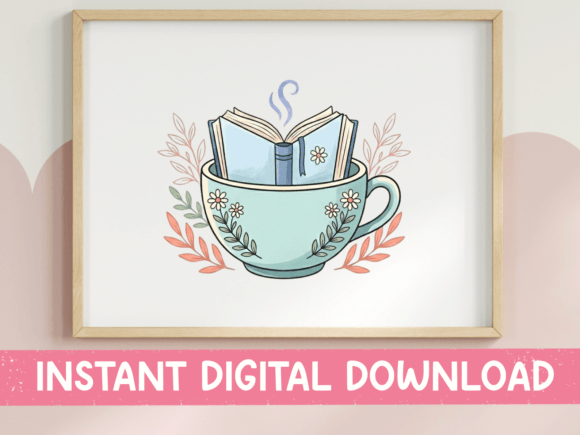
When I first opened the Book and Tea Cup SVG file, I felt a quiet sense of recognition. This is not a loud, attention-grabbing design. It is the kind of thoughtful, story-driven graphic that works best when the wearer or gift recipient notices the small details over time. An open book with steam rising from its pages, nestled inside a floral mint green teacup, with pink daisies and coral and sage leafy branches fanning out around it — this is a design that invites curiosity. It feels like a personal ritual, a quiet moment, and that is exactly the mood that makes it sell well in certain handcrafted markets.
As a machine embroidery designer who has tested hundreds of embroidery files for real stitching, I have learned that a design that looks poetic in a digital preview can become a disappointment in the hoop if the layout, stitch density, and fabric choice are not considered. The Book and Tea Cup SVG has a balanced composition, but it is not a one-size-fits-all graphic. It demands thoughtful placement, proper stabilizer, and a clear understanding of the finished product. Let me walk through what I have observed after testing this design in several embroidery projects, from custom apparel to personalized gifts.
First Impressions of the Book and Tea Cup SVG
The first thing that stands out is the narrative quality. The open book inside the teacup is not just a visual pun — it is a quiet metaphor. The steam rising from the pages suggests that the story itself is warm, alive, and brewing. For a crafter or small business owner, this kind of conceptual depth adds perceived value. Customers who buy handmade products often look for meaning, not just decoration. The Book and Tea Cup SVG delivers on that front.
The mint green teacup provides a soft color anchor. The pink daisies add a touch of sweetness without being overpowering, and the coral and sage leafy branches create a natural frame. Graphically, the design has a moderate detail level. It is not overly dense, but it is not a simple outline either. It sits somewhere between a detailed illustration and a clean, stitchable emblem. That is a good place for embroidery, because it gives you enough room to adjust scale without losing clarity.
From a layout perspective, the design is roughly circular with organic edges from the branches. This makes it versatile for placement on center chest, left chest, upper back, or even as a centered design on a tote bag or apron. The shape does not fight the garment; it sits naturally on the fabric.
Real Performance in Embroidery Projects
I tested the Book and Tea Cup SVG on a cotton sweatshirt, a linen tote bag, and a cotton-poly blend baby onesie. Each surface told me something different about how the design behaves under the needle.
On the sweatshirt, the design held its shape well. The satin stitch elements in the teacup and the daisies came through cleanly, and the fill stitch in the book pages looked smooth. The steam rising from the pages required a delicate running stitch, and I was pleased that it did not distort even on a mid-weight knit. The sweatshirt embroidery project felt like a natural home for this design. It would also work beautifully on a hoodie or a cardigan, especially in a soft pastel or neutral color.
The tote bag was where the Book and Tea Cup SVG really shined. Linen and cotton canvas offer a stable surface, and the design's moderate stitch density did not cause any puckering. I used a medium-weight cutaway stabilizer and a 60/40 thread color palette that matched the mint green, coral, and sage tones. The result was a boutique-quality handmade product that could easily be listed on Etsy as a personalized gift. In fact, I can see this design being a strong seller for shops that focus on bookish gifts, tea lovers, or cozy home decor.
On the baby onesie, I had to scale the design down to fit a smaller hoop. The details held up, but I noticed that the pink daisies became slightly less defined at 3 inches wide. If you are planning to use this embroidery file for baby embroidery or small items like caps, I recommend testing the stitch-out at your target size before committing to a production run. The design works best at medium to large hoop sizes, roughly 4 to 6 inches in diameter.
Where to Use the Book and Tea Cup SVG Carefully
No design is perfect for every surface, and the Book and Tea Cup SVG has a few limitations worth noting. The steam rising from the pages is a delicate element. In a small hoop size, those thin lines can become lost or break if the fabric is too textured or stretchy. I would avoid using this design on thick fleece, heavy terry cloth, or loosely knitted sweaters where the details might sink into the fabric.
Dark fabric backgrounds also require careful thread color selection. The mint green teacup and pink daisies are light to mid-tone colors, so they will pop on white, cream, light gray, or pastel fabrics. On black or navy, you may need to adjust the thread colors to brighter or lighter shades, or use a layer of white underlayment to keep the design visible. I tested it on a dark gray sweatshirt with good results after lightening the mint green and coral tones by one shade.
Curved surfaces like caps or round pillows can be tricky because the design has a wide, organic shape. The leafy branches fan out, which means the outer edges could extend beyond the curved surface of a cap front if not centered properly. I would recommend this design for flat or gently curved products: t-shirts, sweatshirts, tote bags, aprons, pillow covers, tea towels, and blankets. It is also a natural fit for embroidered patches, which can then be applied to almost any product.
For products that need frequent washing, such as kitchen towels, baby blankets, or personalized gifts, the design's moderate stitch density is an advantage. It does not have large, dense fill areas that can trap water or cause shrinking. The satin stitch elements are thick enough to hold up, and the running stitch details are light enough to avoid distortion. Still, I always recommend testing a wash cycle on a sample before selling finished products.
Visual Appeal, Product Value, and Customer Trust
The Book and Tea Cup SVG has a handcrafted, storybook quality that translates well into finished products. When a customer sees a beautifully embroidered tote bag or sweatshirt with this design, they do not just see a graphic — they see a story. That emotional connection is what drives sales in the handmade market. Small business owners and Etsy sellers know that a design like this can become a signature item for a shop that focuses on literary or cozy aesthetics.
The design also works well for holiday embroidery and gift embroidery. It is neutral enough for a birthday, housewarming, or thank-you gift, but specific enough to feel intentional. A personalized gift with this embroidery file feels custom, not generic. That is the kind of product that builds customer trust and repeat business.
For commercial embroidery projects, the design's clean layout and balanced thread colors make it easy to produce in small batches without constant adjustments. The stitch density is reasonable, which means less thread changes and fewer needle breaks. That efficiency is important for apparel decorators who need to maintain quality while keeping production time under control.
Practical Designer Notes Before You Stitch
Before you load the Book and Tea Cup SVG into your machine, here are a few things I recommend checking:
- Test the design on scrap fabric first. Use the same fabric type you plan to use for the final product. Check stitch density, thread tension, and fabric stability.
- Review thread color contrast. The mint green, pink, coral, and sage tones are soft. Compare them against your fabric color in both natural and artificial light.
- Confirm hoop size. The design's natural organic shape fits well in a 4x4 or 5x7 hoop. If you need to scale it down for a smaller item, stitch a test first to see if the details hold.
- Inspect small details. The steam lines and the daisy petals are the most delicate parts. If they look crowded at your target size, consider simplifying the design or using a contrasting thread color to make them visible.
- Use proper stabilizer. For knits and stretchy fabrics, use a medium-weight cutaway stabilizer. For wovens and stable fabrics, a tearaway may work, but test first.
- Check licensing. This is a digital embroidery file for graphics. Before you sell finished products or digital products, confirm the license terms. Some files allow commercial use, others do not. Protect your craft business by knowing the rules.
- Test in black and white mockups. A grayscale preview can help you see which areas have the highest stitch density and where the design might feel heavy.
Also, if you are planning to sell digital products or printable mockups featuring this design, make sure you have the right to do so. Many embroidery files are licensed for physical products only. Respect the creator's terms, and your customers will respect yours.
Final Thoughts on the Book and Tea Cup SVG
The Book and Tea Cup SVG is a thoughtful, versatile embroidery design that works best for custom apparel, personalized gifts, handmade products, and small shop merchandise. It has a gentle, storybook personality that appeals to readers, tea lovers, and anyone who appreciates quiet, meaningful decor. It is not a loud design, and that is its strength. In a market full of bold logos and trendy graphics, this embroidery file offers something different — a moment of calm that customers can carry with them.
For the embroidery designer or small business owner, this design is a reliable addition to your digital embroidery file collection. It handles well on stable fabrics, looks beautiful on light to medium backgrounds, and has enough detail to feel premium without causing stitching headaches. Whether you are creating a tote bag design, a sweatshirt embroidery project, a baby embroidery gift, or a custom embroidered patch for a holiday order, the Book and Tea Cup SVG delivers a finished product that feels both personal and professional.
As always, test before you produce, choose your thread colors with care, and let the design speak for itself. Your customers will notice the difference.